
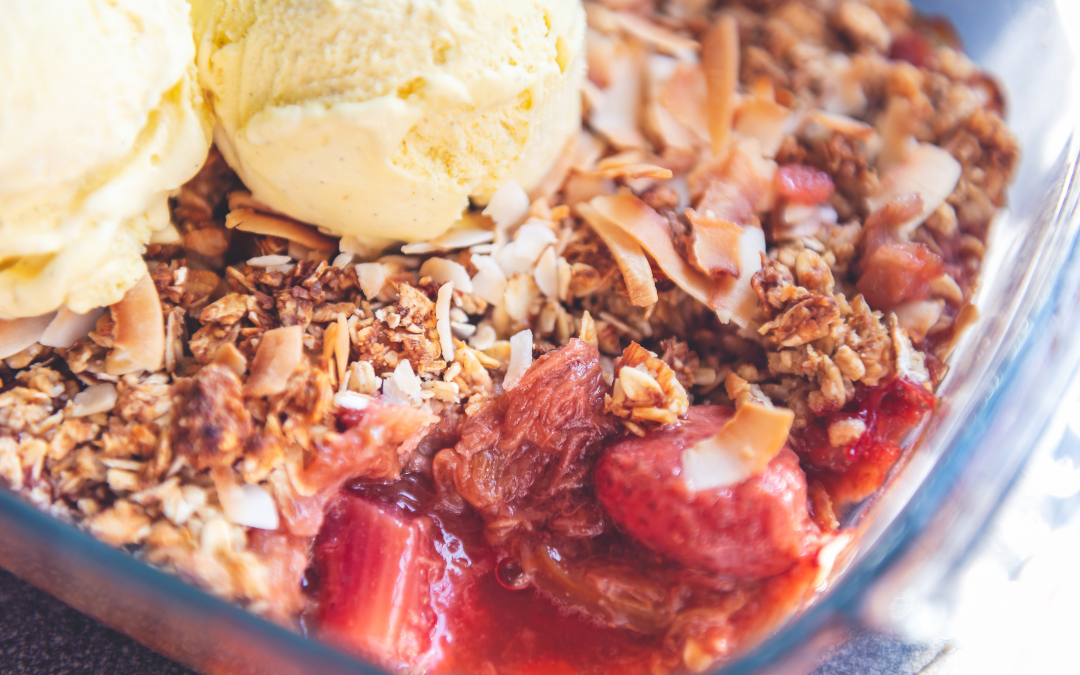
Image Source: Manuta from Getty Images
This lighter take on a classic jumbleberry crumble keeps plenty of the good stuff — juicy berries, oats and cinnamon — while cutting back on sugar and swapping butter for a cholesterol-free plant oil.
Why this recipe works
Berries bring plenty of natural sweetness, so you don’t need as much added sugar to make this dessert feel satisfying.
Reducing the sugar in both the filling and topping helps bring the overall sugar content down, while oats and wholemeal flour add a little more fibre. Swapping butter for canola or another neutral plant oil also reduces the cholesterol in the crumble itself.
Serves: 8
Prep: 15 minutes
Cook: 40–50 minutes
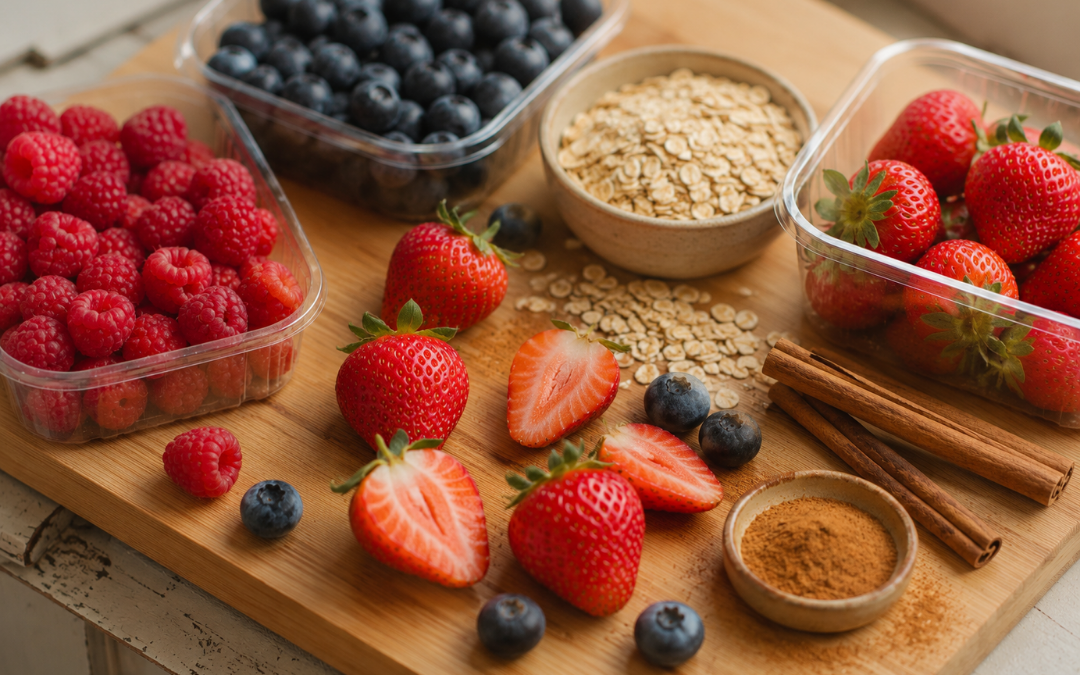
Image Source: AI-generated
Ingredients
Berry filling
- 3 cups fresh strawberries, halved
- 1½ cups fresh raspberries
- 1½ cups fresh blueberries
- ⅓ cup caster sugar, optional.
- 1 teaspoon vanilla extract, optional
Crumble topping
- ¼ cup wholemeal flour
- ¾ cup rolled or quick oats
- ¼ cup brown sugar
- 1 teaspoon ground cinnamon
- ¼ cup canola oil
Method
- Preheat the oven to 180 degrees celsius.
- Add the strawberries, raspberries and blueberries to a large bowl.
- Mix the caster sugar, berries and vanilla together.
- Transfer the berry mixture to the baking dish.
- Combine the flour, oats, brown sugar and cinnamon in a separate bowl.
- Add the canola oil and stir until the mixture forms a loose crumble.
- Sprinkle the topping evenly over the berries.
- Bake for 40–50 minutes, or until the berries are bubbling and the topping is golden.
- Leave to cool slightly before serving.
- Top it warm with a spoonful of plain Greek yoghurt for a creamy finish.
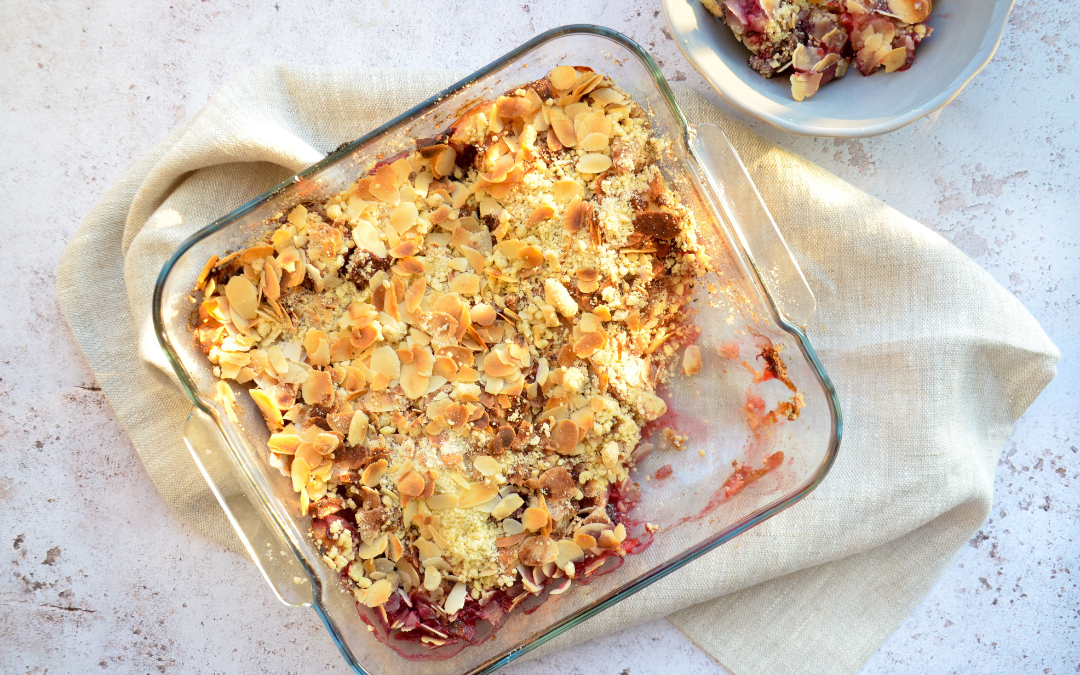
Image source: Sofya Zakharova from Pexels
Easy swaps and shortcuts
Use frozen berries: A frozen berry mix can work in exchange for fresh berries.
Cut the sugar further: If your berries are particularly ripe and sweet, try slightly less sugar in the filling.
Make it more oat-y: Replace a little more of the flour with oats for extra texture.
Prefer butter? You can still use a small amount of unsalted butter if you prefer the flavour.
What changes nutritionally?
The original recipe contains approximately:
- 36g sugar
- 84mg sodium
- 20mg of cholesterol per serve
With the reduced sugar and plant-oil swap, this version may bring the sugar down to around 20–22g per serve and remove the unnecessary cholesterol from the butter. Sodium should also remain relatively low when no salt is added.
These figures are estimates and will vary depending on the fruit, brands and exact quantities used.
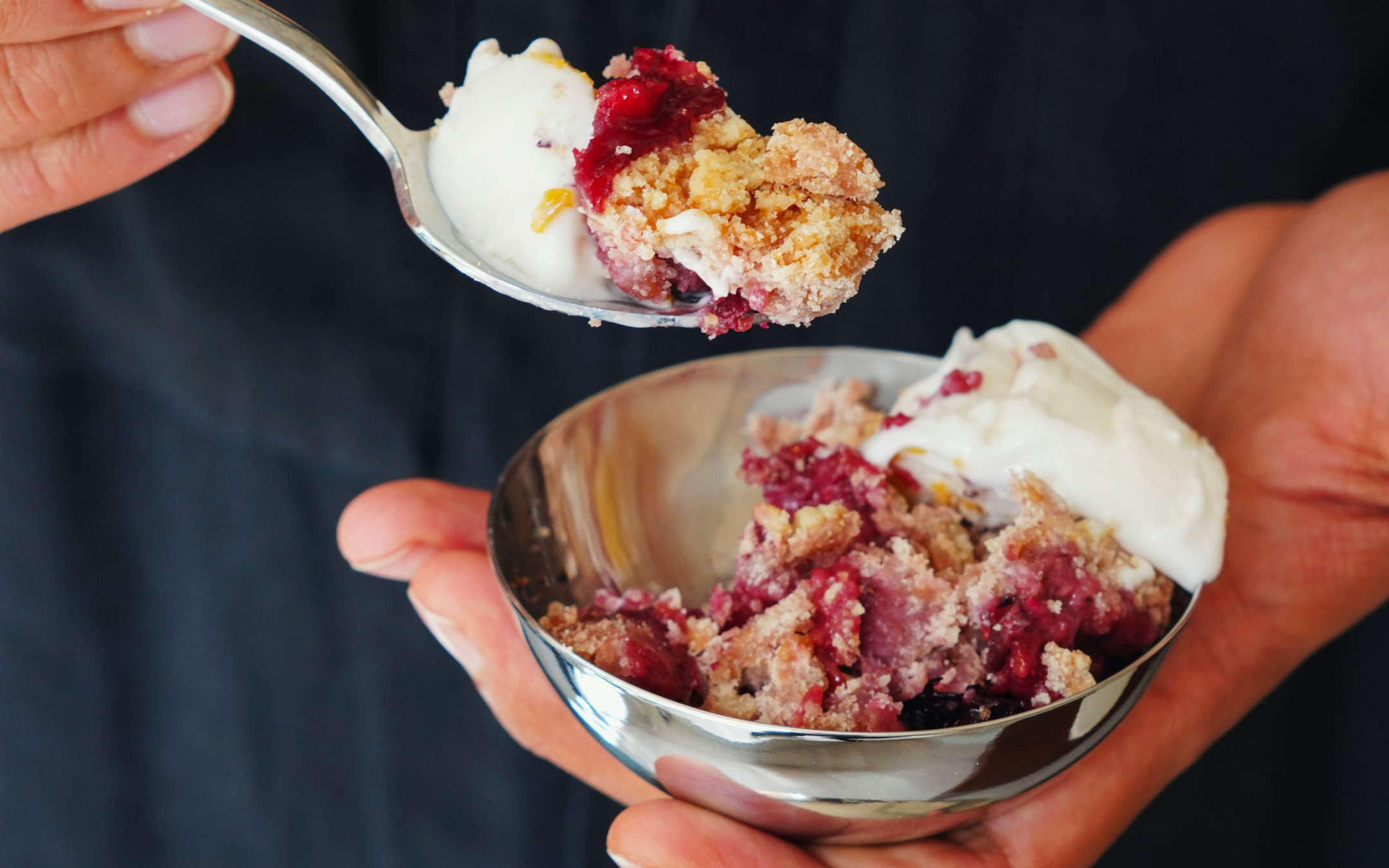
Image source: Can Kensin from Pexels
Key takeaway
A few simple changes can make a traditional dessert a little lighter without taking away what makes it enjoyable.
Your wellbeing, your way
Small, realistic swaps can make favourite recipes work a little better for everyday eating. Through WHEREFIT, members can also explore nutrition and healthy meal options, including meal delivery services, nutrition apps and other food-related wellbeing offers.